That was the best summary of our last meeting recording the podcast “Artificial Intelligence Is Not Artificial Wisdom.”
Marjorie Mccubbins Muhammad Izhar Ul Haq and I talked about “𝐫𝐞𝐭𝐡𝐢𝐧𝐤𝐢𝐧𝐠 𝐛𝐢𝐨𝐢𝐧𝐟𝐨𝐫𝐦𝐚𝐭𝐢𝐜𝐬 𝐞𝐱𝐩𝐞𝐫𝐭𝐢𝐬𝐞 𝐢𝐧 𝐭𝐡𝐞 𝐞𝐫𝐚 𝐨𝐟 𝐚𝐫𝐭𝐢𝐟𝐢𝐜𝐢𝐚𝐥 𝐢𝐧𝐭𝐞𝐥𝐥𝐢𝐠𝐞𝐧𝐜𝐞” (inspired by a hugely popular article published this year)
As a bioinformatician, the most common request I receive is to analyze sequencing data. I prepared this seminar focused on the recommendations I would love to have when I’ve started on this path.
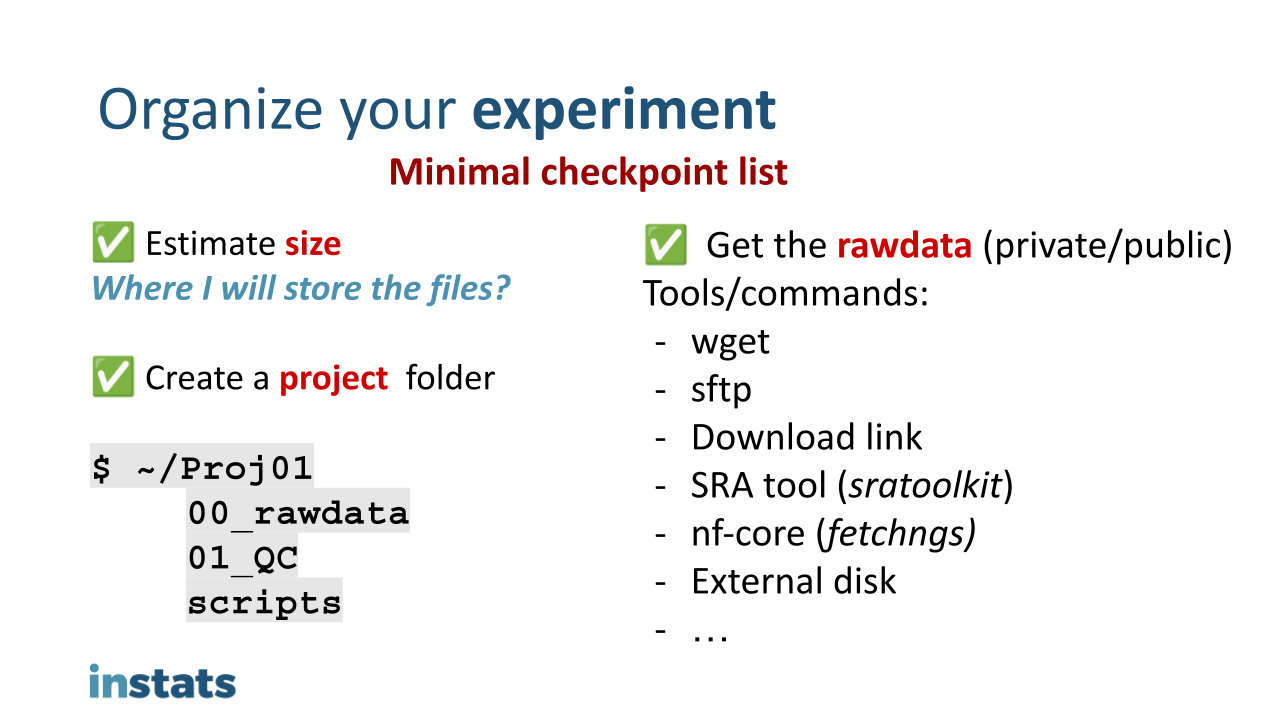
Whether you’re working with private or public data, here’s the workflow I always recommend:
✅ Set up a clean project folder from day one
✅ Estimate your file sizes and check storage & compute capacity
✅ Retrieve your raw data (private or public sources)
✅ Run QC — non-negotiable
✅ Launch your NGS pipeline of choice
💡 Pro tip: always run the full pipeline on a single sample first to benchmark time and resources.
If you’re not sure where to begin, let’s talk. Book a free 30-minute call and we’ll design a plan tailored to your data and goals.
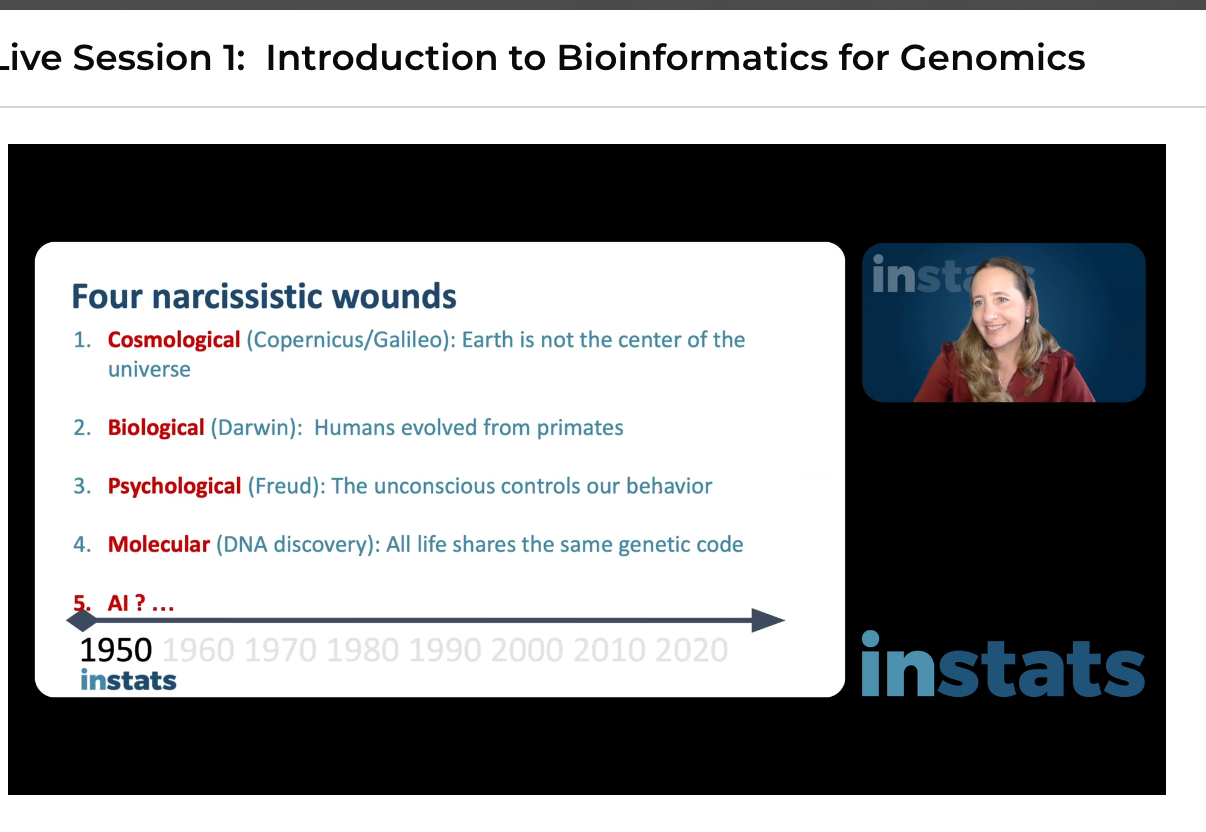
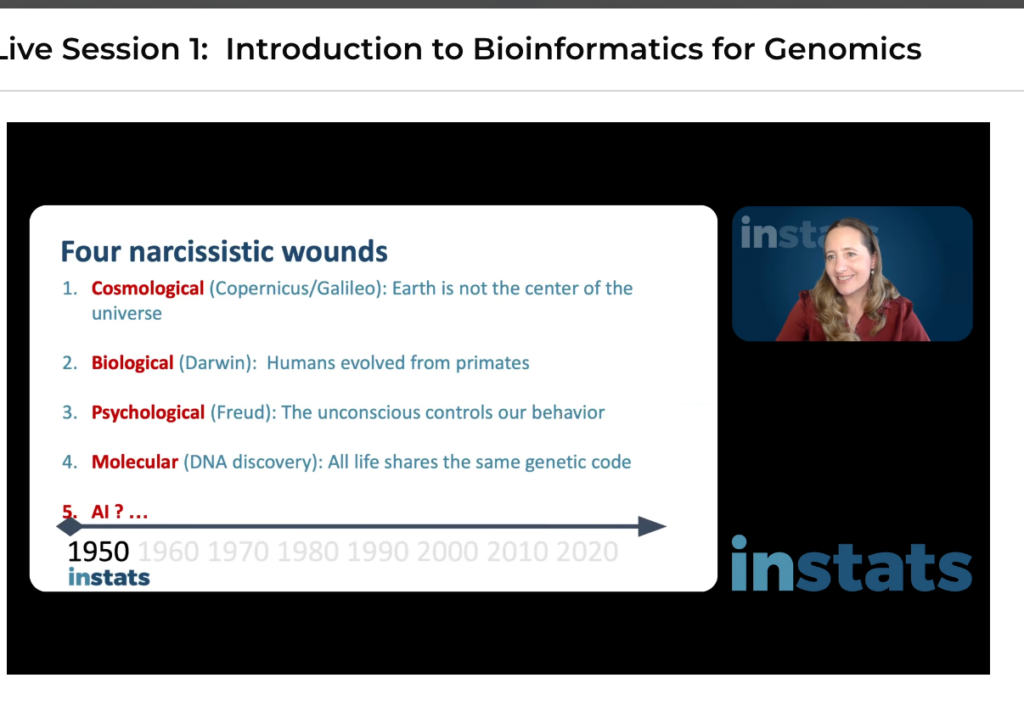
I couldn’t resist bringing this question into my first seminar on the instats platform, where I introduced key bioinformatics methods for analyzing sequencing and genomics data, celebrating 25 years since the first publication of the human genome sequence.
instats is a mission-driven organization devoted to improving multidisciplinary research practices globally and I’m proud to be part of their community.
For those who missed it, the seminar is free and available online
And as always say: the more you share what you know, the more you realize how much more there is to learn.